Bulk Oil Storage & Transportation (BOST) Company Limited is undergoing a major transformation in its quest to make it a viable and profitable business enterprise. Our vision is to become the Preferred Provider of Oil and Gas Logistics in the country and elsewhere in the sub-region. As a private limited liability company with the Ghana Government as its sole shareholder, our financial and operational performance over the past several years have shown significant changes and reversal of operating losses to surpluses and achieving a positive shareholder’s equity position. These improvements in performance have been accomplished with the total support of the Board and Management.
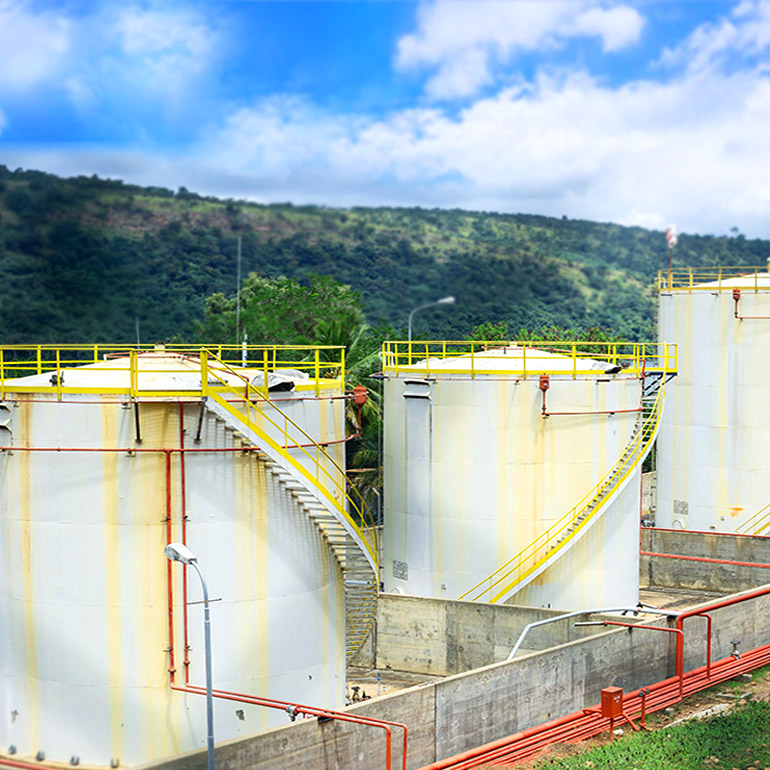
Foremost, BOST will continue to aggressively pursue its most critical mandate as the custodian of strategic stock reserves for Ghana. To ensure national fuel security, BOST has embarked on a major infrastructure development program. 70,000 cubic meters of storage capacity for refined petroleum products will be added on-stream at our Accra Plains Depot (APD) by 2nd quarter of 2012 to bring our total storage capacity to 430,000 cubic meters. We will expect to break ground for the BOST Petroleum Terminal before year-end on our 300-acre Atwereboanda site for the construction of a 150,000 cubic meters storage facility, the largest petroleum terminal in the country. This expansion of network infrastructure will bring our total network storage to approx. 600,000 cubic meters (the equivalent of 12 weeks of national consumption).
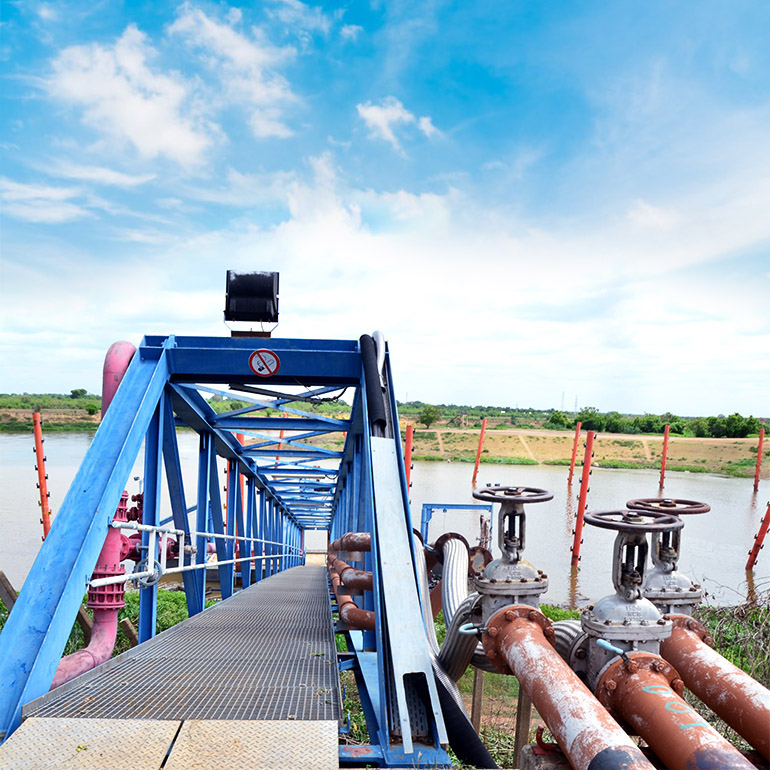
The pipeline network will be boosted by the addition of twin pipelines between Tema and Akosombo by year-end. It is important for BOST to forge strategic alliances with our partners and customers in the land-locked countries in the supply and transportation of petroleum products to their markets. Hence, there is the need for BOST to increase our throughput capacity along the Eastern Corridor with the combination of pipeline and barge transportation on the Volta Lake to transport petroleum products to the North. BOST annual volume throughput could reach in excess of 1.8 billion liters with attendant improvement in network utilization.
BOST will prioritize the development and construction of a number of LPG satellite depots to ensure a long-term solution to the perennial LPG shortages in the country.
BOST will soon operate and maintain the National Gas Grid when it assumes its role as the Natural Gas Transmission Utility (NGTU) with completion of the Western Corridor Transmission System. In addition to the new mandate as the “GRIDCO” of natural gas, BOST will partner with a number of private investors to develop the Tema Gas Distribution network to support the burgeoning commercial and industrial users of natural gas.
Human resource is our most critical and vital asset and we must develop them to meet the changing needs of BOST. A new organizational alignment framework has now been introduced into the company where we expect to build a new BOST of highly motivated, fully trained group of well-paid employees. We will provide a safe and secure environment where each employee is committed to their job, is a team player, wants to contribute to BOST as an owner.
Finally, BOST will position itself to face the challenges of potential competition from its valued customers i.e. the bulk distribution companies (BDCs) and the reduction of Government involvement in energy sector institutions while taking full advantage of the emerging Oil and Gas industry.
The government of Ghana under the better for Ghana agenda BOST has been mandated by the Ministry of Energy to quickly consider the installation of LPG storage to augment the existing private sector
LPG Satellite Depots
Plans are underway to build three LPG depots at Savelugu (in the North), Kumasi ( in the middle) and Mami Water (in the east) to supplement the existing LPG storage depot in Tema (in the south) and the proposed BOST depot at Pumpuni (in the west). The three depots are planned to be completed in 2012 and altogether, these depots should move the supply constraints currently facing the country.
BOST Petroleum Terminal
An application has been submitted to the Ministry of Finance for BOST to benefit from the US$ 3 billion Chinese loan to build the BOST Petroleum Terminal at Pumpuni. A feasibility study for the project has been prepared and the major outstanding issues include the Restructuring ofBOST into a holding company, the Financial Restructuring of the company, an Owner’s Engineer and the finalization of the acquisition of the Pumpuni Land.
Other companies and institutions including the Canadian Commercial Corporation(CCC) continue to express interest in the project which is expected to be an export-oriented, world class terminal.
BOST should continue to work towards the selection of an able partner for the operation and marketing of the terminal as it would face very stiff competition from both local and well- established world-class oil marketers.
The commencement of oil production in Ghana has brought about changes in the mandate of state institutions and state-owned companies operating in the energy sector, among them, the Bulk Oil Storage and Transportation Company Limited, BOST. From its original mandate of managing Ghana’s strategic stocks of petroleum products, BOST is now expected to join other sister energy sector institutions to spearhead the country’s gas based industrialization. Over the initial phase of oil production, Ghana expects to produce about 120,000 barrels a day, then, the subsequent phase starting form 2014 will double the output to almost 250,000 barrels a day. All of that oil will come from just one field, out of several to be developed. BOST’s role in the big picture of transformation Ghana’s economy through the emerging oil industry is to transport the natural gas associated with the off-shore oil and gas production once the gas is piped on-shore. So bright is the promise of Ghana’s gas fortune that since commercial oil production started in December 2010, new discoveries of natural gas have been made even as further exploration activities continue. With increasing prospects of more discoveries, industry experts project that the volume of oil to be produced in Ghana could go up to between 500,000 and 1 million barrels a day in the near future. The sheer size of the potential gas reserves of the country is better appreciated when one considers that there is ten times much natural gas crude oil in the Jubilee field, and early indications are that the newly discovered Tweneboa field holds even a greater proportion of gas to oil. It is this massive volume of natural gas that the country is counting on to transform its economy from the current lower end middle income status into an economic giant in Africa and the world. “We are looking at both associated and non-associated gas. That can become a major driver of the economy. We see the gas powering our thermal plants, supplying industry and households with low cost electricity and further downstream, we can see a petrochemical industry developing.
In pursuit of its expanded mandate as a major player in the secondary gas sector, The Bulk Oil Storage and Transportation Company Ltd (BOST) is acquiring over 300 acres of land near Takoradi to serve as the hub for the transportation of natural gas and liquefied petroleum gas (LPG) from Ghana’s oil fields to support a renewed gas-based industrialization drive. The Bulk Oil Storage and Transportation (BOST) Company is completing feasibility studies to construct a modern gas transmission system to serve Ghana and its neighboring countries in support of its additional mandate to become the national transporter of natural gas. To start with, BOST will construct a gas terminal at Pumpuni, near Takoradi in the Western Region, and also develop the first phase of the Western Corridor Transmission System, all estimated to cost US $600 million, to start this year and end in 2013. The government will solely fund the project through bilateral arrangements. The multi-million dollar project will create thousands of jobs for Ghanaians and give meaning to the local content and local participation in the petroleum industry policy which aims at indigenizing the oil and gas industry. Right from the blast, the monumental project will generate jobs for artisans, metal fabricators, welders, carpenters, caterers, drivers, engineers, among others, Some of the major industries in the Western and Central Regions that can breathe a sigh of relief are the Abosso Glass Factory, the integrated alumina processing industry of which Sekondi will now be the hub, the Bokazo and Saltpond ceramic factories and the Nsuta manganese processing project. The gas processing plant is expected to produce dry gas for power generation, minerals processing and petrochemicals; natural gas liquids, as well as deliver LPG in volumes of about five times what is currently produced by the Tema Oil Refinery (TOR).
In order to legitimize its role in the natural gas value chain, BOST’s mandate had to be expanded. In essence, what this means is that BOST would develop, build and manage the network of transmission pipelines we would need to move natural gas from its source to destinations such as markets and end users. For example, in the area of markets that we would be addressing, we are talking of power generation plants for electricity, minerals processing such as bauxite, manganese and iron ore and so forth that require natural gas. We’re also looking at using liquefied petroleum gas (LPG) and natural gas liquids derived from processing the natural gas to serve the petrochemical industry including fertilizer producers.” The company has built significant capacity from the early days of its establishment in 1993 when it started distributing refined petroleum products from its depots that are strategically located around the country. Up until 2001, BOST even announced petroleum prices on behalf of the government.
Our accomplishments have been that we have expanded from a level of about 20,000 cubic meters to 340,000 cubic meters in terms of storage capacity for our six depots. We also have pipelines of roughly 360km linking all the depots. We have built four barges about to be inaugurated to transport petroleum products on the Volta Lake through to the Northern Region as part of our distribution network. In a year, we can deliver up to a million metric tons of petroleum products through our network systems,” he said. For a country that has only one source of fuel supply, which is the Tema Oil Refinery, the strategic importance of BOST has never been underestimated by the authorities. And many analysts have lauded the vision of setting up the company to serve as a storage back-up for the country’s only refinery. It is common knowledge what will happen to regular fuel supply if there was not a company like BOST. Supply of petroleum products could be affected in three different ways: there could be industrial action at the oil refinery; there could be fire outbreak; or the plant may have to be shut down for routine maintenance. Without a BOST in Ghana, like some of her neighbours, Ghana would experience regular fuel shortages and motorists would have to endure long queues at fuel pump stations. Without BOST, even if Ghana got the oil for free there would be no place to store it. BOST has now built capacity to hold strategic reserves to meet about 6 weeks of national consumption of petroleum products and will increase this to 12 weeks in the medium to long term. Having successfully achieved its minimum target of 6 weeks of reserve capacity, Bost looks poised to take on its new additional role of becoming the logistics centre for moving the natural gas, once on-shore, to the various intended destinations. The whole idea is to be able to move the natural gas from sources such as Jubilee, Dzata and Sankofa fields to end users at the right time and to the right place at the lowest cost and in an environmentally and socially responsible manner. In addition, we will be able to store it and distribute it as and when its needed.
Funding is important to us. The funding requirement for natural gas investments is quite significant and we need to be able to partner with the right strategic partner or collaborators in order to achieve the targets we have. Firstly, the vision of the energy sector is to develop an energy economy and it means that we need to be able to ensure reliable and secure supply of energy services. Secondly, we want to become a net-exporter of petroleum products and electricity to the sub-region in the medium term so the country’s interest is to become the fastest growing destination for investments we are looking for relates to infrastructure development, which tend to be very capital intensive. We are talking of roughly US $500 million for just the Western corridor transmission system. BOST has a project that will integrate all our depots and we are talking of a petroleum terminal near Takoradi in the Western Region that would be a network of storage facilities. We require close to US$200 million for the project. These two projects are going to be a major flagship of our new mandate to move into the natural gas sector. One approach to raising funds for BOST projects is to depend solely on the public sector. This will take the form of bilateral arrangement between the Government of Ghana and any of the country’s development partner countries. We are now headed in a direction where we are going to look at the public-private partnership and bring in consortiums of technology providers or financiers who would be able to partner with us in some form to create a special purpose vehicle or joint ventures. We will ultimately have a hybrid of both public and private sector partnerships as we move forward. To enable BOST to attract suitable private partners, the government has put in the petroleum price build up, what it calls the BOST margin, which serves as some form of security for the company to borrow money commercially. BOST’s storage tanks could also be used as collateral security for any loan. We need investors who take a long term view of the projects they embark on. The reason is that , most of our projects are very capital intensive and require significant funding and resources in the area of technology. BOST would be able to provide investors with local knowledge and facilitate the investment in the country. It is important that investors consider value addition with local content in mind and ensure that they train and absorb local labour and develop local capacity.” It will take more than BOST to see Ghana’s gas –based industrialization materialized. Others such as the Ghana National Petroleum Corporation, which represents Ghana’s oil interests in the Jubilee field, the Volta River Authority, the Energy Commission, private investors as well as the government of the day, all have very important roles to play.

BOST wishes to inform the General Public and our Partners that there are sufficient quantities of fuel in the country, for this reason there is no fuel shortage of petroleum products in the country. The challenge now is the delivery of the product to the various depots across the country to ensure the oil marketing companies serve their filling stations.
We advise the general public particularly the Northern part of the country not to engage in panic buying of petroleum products as every effort is being made to address the problem.
The current issue aroused because of technical challenges BOST encountered at its Buipe depot between BOST and Tanker drivers over the mode of discharging of fuel into the Buipe depot which serves the Northern sector of the country. The stabilization of the markets is on-going and by the close of business tomorrow, the situation should return to normal.
BOST as a company has a policy to install flow meters in all our depots to accurately record quantities of petroleum products discharged from bulk road vehicles (tankers) into storage tanks at the various depots. The use of T-Bar in physical petroleum measurement has been found to be inefficient as this depends entirely on discretion of persons involved in the measurement, which are sometimes manipulated to the disadvantage of BOST resulting in product losses.
In the light of the above, BOST installed flow meters at its Buipe depot, and since the operationalization of the depot in January, 2011 products have been discharged into storage tanks by the use of flow meters. The Ghana Standards Authority has authenticated flow meters as an efficient way of dispensing the right quantities to the consumer.
As a result efforts are currently underway to install flow meters in other depots which still use T-Bar in products measurements. To give assurance to the drivers and all concerned that the meters operate accurately, they are verified regularly by the use of “prover tanks” calibrated for a fixed volume of product and passed through the meter to check its accuracy. This is also done by the Ghana Standards Authority.
We need to control the losses on the products entrusted into our care at the depots and this can be achieved by the use of flow meters to eliminate or reduce the level of human involvement in petroleum measurement.
On January 28, 2013, the meters were found to register inconsistent readings and in order not to create product shortages in the Northern sector of the country, the depot temporarily used the T-bar pending the rectification of the fault. Repair and calibration of the meters were completed on February 1, 2013 and the following day BOST was ready to resume product discharge through flow meters and invited the drivers to resume work. However, the tanker drivers insisted on the continuous use of the T-bar and this created the back log.
However, a meeting was held on Monday February 18, 2013 between BOST and the Tanker Drivers Union and an agreement has been reached on the processes and procedure for the discharge of the backlog of BRV’s (tankers). Discharge of products into the storage tanks resumed yesterday afternoon and this process will continue until the situation up North is regularized.
Yours faithfully,
Mr. Salifu Nat Acheampong
Corporate Communications Manager
0547218264

Processes towards constructing a gas storage terminal for processed gas, including liquefied petroleum gas (LPG) by the Bulk Oil Storage and Transportation Company Limited (BOST) have began earnestly, even as the company awaits its natural gas transmission utility (NGTU) licensing by the Energy Commission.
The project includes integrating all of BOST’s depots and involves a petroleum terminal at Pumpuni, 25-kilometres west of Takoradi in the Western Region, where processed gas from the Jubilee Oil Field would be stored. Valued at $235million, the project, which includes a network of storage facilities, tanks and pipelines as well as export and re-export facilities is to be funded largely under the $3billion China Development Bank (CDB) loan, the Master Facility Agreement (MFA) of which Parliament approved early this year, after it was first presented to the House in August 2011. A subsidiary agreement covering $200million dollars of the CDB loan, representing 85% of the total project cost, is expected to be passed by Parliament as one of three outstanding agreements, following the passage of nine others under the current phase of the facility.
“With the CDB facility, the basic project will involve having a petroleum terminal, at Pumpuni with 150scm storage Petroleum products, 20,000 gas coming from the gas processing plant from Atuabo.
Already, preparatory works are ongoing on a 300-acre land acquired by government under an Executive Instrument, with compensation payment totaling about GHC4.5 million also ongoing and expected to be completed by end of June this year. The compensation is part of the project cost.
BOST has selected Petrochem Engineering Services as Consultants for the front end engineering and design (FEED) works and they are currently carrying out the basic engineering work, including confirmation of hydrological surveys. “We have already done the feasibility studies; we’ have already done the environmental impact assessment; report is ready and we are working with the Environmental Protection Agency (EPA) for the necessary permits,” Dr. Akoto told The Business Analyst.
With government policy hinging on the gas component as the pivot on which a new growth pole to drive the economy rests, BOST, which currently manages a network of seven storage depots, ensures strategic stock reserves of 6 to 12 weeks products, is expanding its infrastructure.
Even though the entire project is estimated to take 18 to 24 months to complete, aspects of it such as the LPG storage facility construction is projected to be fast-tracked to coincide with the completion of the gas processing plant and pipelines by the Ghana National Gas Company (Ghana Gas), to terminate at Pumpuni, the site for the BOST storage facility.
Ghana Gas is scheduled to start taking delivery of the pipes to be laid from the shallow water, 14 kilometres from the Jubilee Field, as well as onshore transmission pipes covering over 100-kilometers to terminate at Pumpuni. The gas infrastructure project represents BOST’s flagship under a new mandate it is seeking to become the natural gas transmission utility.
BOST is seeking, under the expanded mandate, to transport the natural gas associated with the off-shore oil and gas production once the gas is piped on-shore. It already manages a network of 360-kilometres of pipeline. “BOST’s new mandate is to become the natural gas transporter, which means we would develop, build and manage the network of transmission pipelines we would need to move natural gas from its source to destinations such as markets and end users,” Dr. Akoto had told The Business Analyst.
Besides the gas infrastructure, BOST is going to construct both tanker and rail loading facility, a common berthing mechanism (CBM), to serve as an alternative distribution point to the only one at Tema.
First processed gas from the Jubilee Field, is earmarked to be wheeled from Atuabo, where the gas processing plant is to be located, to the Pumpuni facility for storage, from where it would be piped to fuel the Aboadze Thermal plant in Takoradi, to reduce the cost of generating electricity.
Besides Aboadze, the target markets for the processed gas includes power plants for cheaper electricity to process minerals such as bauxite, manganese and iron ore and the mining areas in the Western region.
Government has targeted also to boost domestic LPG requirements as well as natural gas liquids gas liquids for petrochemical industries, including fertilizer production. BOST’s original role has involved developing, owning, managing and maintaining a national network of storage depots and petroleum pipelines to facilitate the smooth bulk transportation, storage and distribution of petroleum products The company, which was established in 1993, distributing refined petroleum products from its depots that are strategically located around the country and has since built significant capacity, with some of its technical personnel currently involved in the Ghana Gas project.